VISIT DR. ANU SIIDANA'S AASTHA MEDICARE

Early Pregnancy Symptoms (Weeks 0–4): Signs, Changes & What to Expect
Looking for early pregnancy symptoms in weeks 0–4? This guide covers the first signs of pregnancy, including symptoms before a missed period caused by implantation and rising hCG levels. Learn to identify common signs like spotting, cramps, fatigue, breast tenderness, nausea, and mood changes, along with when to take a pregnancy test for accurate results.
PREGNANCY
Dr.Anu Sidana
4/2/20263 min read
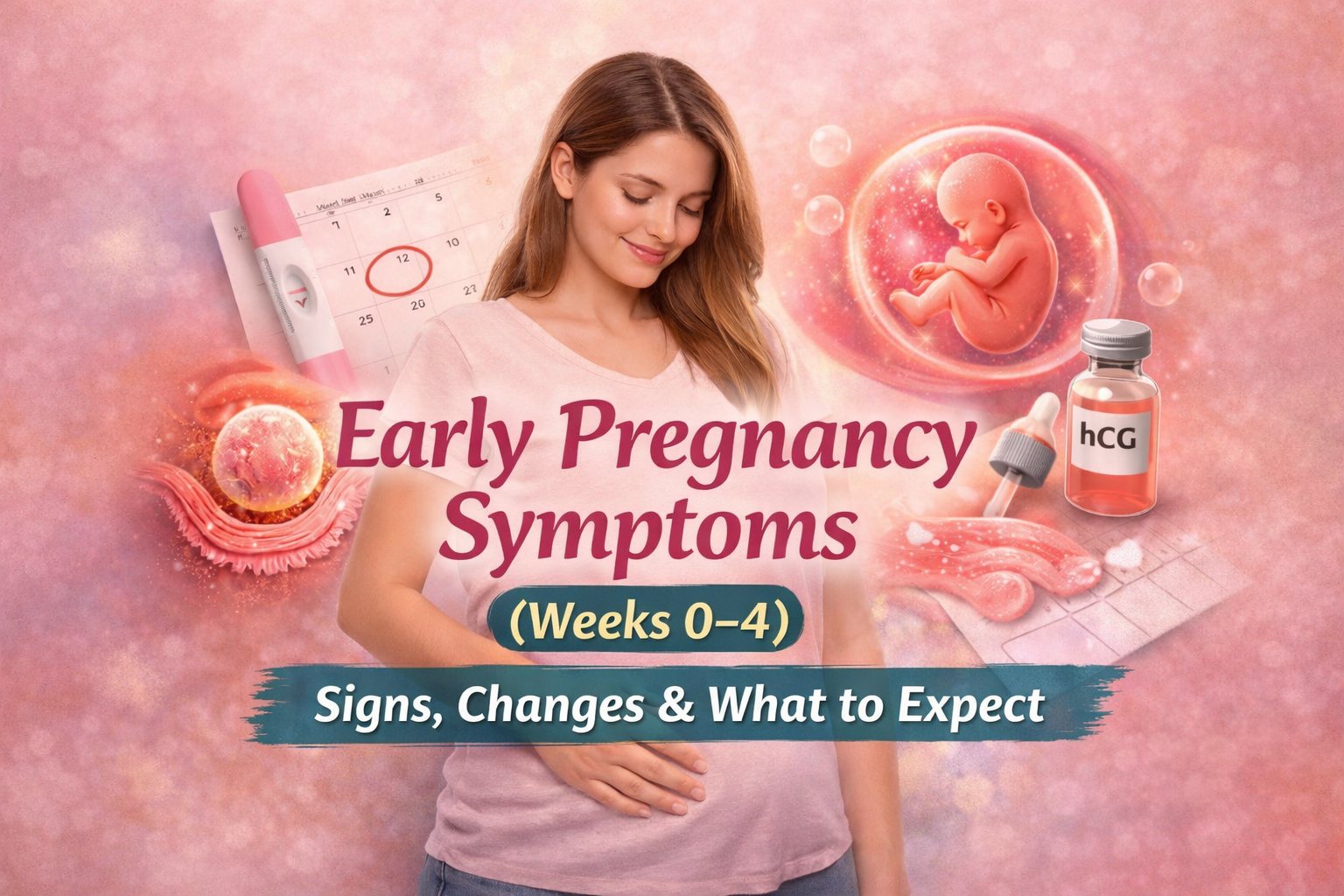
Early Pregnancy Symptoms (Weeks 0–4): Signs, Changes & What to Expect
Introduction
The earliest stage of pregnancy, covering weeks 0 to 4, is often the most confusing yet crucial phase. Many women begin to notice subtle changes in their bodies even before a missed period or a positive pregnancy test. These early signs can easily be mistaken for premenstrual symptoms, making it difficult to identify pregnancy right away.
Understanding what happens during these first few weeks and recognizing early pregnancy symptoms can help you take timely steps toward a healthy pregnancy. This guide explains everything you need to know about pregnancy weeks 0–4, including symptoms, internal changes, and when to confirm pregnancy.
Understanding Weeks 0–4 of Pregnancy
Pregnancy is medically calculated from the first day of your last menstrual period (LMP), not from the day of conception. This means that during the initial weeks, your body is preparing for ovulation and possible fertilization.
Around the second week, ovulation occurs, and if sperm fertilizes the egg, a zygote is formed. By the third week, this fertilized egg travels down the fallopian tube and attaches itself to the lining of the uterus in a process known as implantation. By week four, the body begins producing the hormone human chorionic gonadotropin (hCG), which is responsible for most early pregnancy symptoms and is also what pregnancy tests detect.
Early Pregnancy Symptoms in Weeks 0–4
Missed Period
One of the earliest and most common signs of pregnancy is a missed menstrual cycle. However, in the very early phase (weeks 0–3), this may not have occurred yet.Implantation Bleeding
Light spotting, usually pink or brown in color, may occur when the fertilized egg attaches to the uterine lining. This typically happens around 6–12 days after ovulation.Mild Cramping
Some women experience slight abdominal cramps during implantation. These are usually milder than regular period cramps and short-lived.Breast Tenderness and Changes
Hormonal shifts can make breasts feel sore, swollen, or sensitive. The areolas may also appear darker than usual.Fatigue and Low Energy
Increased progesterone levels can cause unusual tiredness, even without significant physical activity. This is one of the earliest noticeable symptoms.Nausea or Food Sensitivity
Although more common later, some women begin to feel mild nausea or develop aversions to certain foods by week 4.Frequent Urination
Hormonal changes increase blood flow to the kidneys, leading to a need to urinate more often than usual.Mood Swings and Emotional Changes
Rapid hormonal fluctuations can cause irritability, mood swings, or increased emotional sensitivity.Bloating and Digestive Changes
Hormonal changes may slow digestion, causing a feeling of fullness or bloating similar to premenstrual symptoms.Heightened Sense of Smell
Some women become more sensitive to smells early in pregnancy, which may also trigger nausea.
Symptoms Before a Missed Period
It is possible to notice signs of pregnancy even before missing a period, although these symptoms are often subtle. Implantation spotting, fatigue, breast tenderness, and mild cramping are among the earliest indicators. However, because these symptoms closely resemble PMS, they should not be relied upon alone to confirm pregnancy.
When to Take a Pregnancy Test
The most reliable way to confirm pregnancy is through a pregnancy test. For accurate results, it is recommended to take the test after a missed period, usually around week four or later. Testing too early may result in a false negative because hCG levels may not yet be high enough to detect.
Using the first urine of the morning can improve accuracy, as hormone levels are more concentrated at that time.
What to Do If You Suspect Pregnancy
If you think you might be pregnant, it is important to start taking care of your health immediately. Begin with folic acid supplementation, which helps in the early development of the baby and reduces the risk of neural tube defects. Avoid alcohol, smoking, and any medications that are not prescribed by a doctor.
Maintaining a balanced diet, staying hydrated, and getting adequate rest are essential. It is also advisable to consult a gynecologist to confirm the pregnancy and begin proper prenatal care.
When to Seek Medical Advice
While early pregnancy symptoms are usually mild, certain signs should not be ignored. Heavy bleeding, severe abdominal pain, dizziness, or fainting require immediate medical attention, as they could indicate complications.
Conclusion
The first four weeks of pregnancy mark the beginning of a complex and delicate process within the body. Although symptoms during this phase may be subtle, recognizing early signs such as fatigue, spotting, and breast tenderness can help you identify pregnancy sooner.
However, confirmation through a pregnancy test after a missed period remains essential. Being aware of these early changes allows you to take the right steps toward a healthy and well-supported pregnancy journey.